
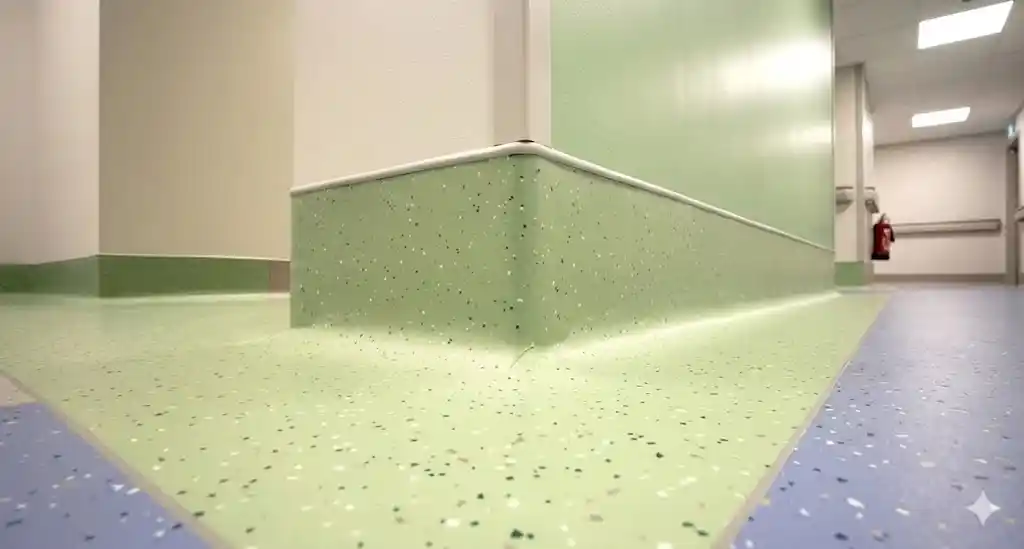
Vinyl vs epoxy coving – what’s the difference? Not all coving materials are designed to handle moisture, heavy use, or strict hygiene requirements. While traditional options like plaster or MDF work well in living rooms and bedrooms, they often struggle in wet rooms, kitchens, and commercial environments.
That’s where vinyl coving and epoxy coving come in. These specialist materials are engineered for durability, water resistance, and easy maintenance, making them ideal for both residential upgrades and professional fit-outs.
With growing demand across Ireland for moisture-resistant, hygienic interior finishes, homeowners and trade professionals are increasingly turning to solutions similar to those offered by Gaudi Coving and other high-performance suppliers.
What is Vinyl Coving?
Definition & Composition
Vinyl coving is a flexible PVC-based material designed to create smooth, sealed transitions between walls and ceilings or floors. It’s widely used in environments where hygiene and water resistance are essential.
Key Properties
- Fully waterproof and non-porous
- Flexible enough for curved or uneven walls
- Easy to clean, making it ideal for regulated environments
- Resistant to mould and bacteria buildup
Where Vinyl Coving is Used
Vinyl coving is commonly found in:
- Hospitals and healthcare settings
- Commercial kitchens
- Bathrooms and wet rooms
- Retail and hospitality spaces
In Ireland, it’s also gaining popularity in modern home renovations, particularly in bathrooms and utility rooms where durability matters most.
What is Epoxy Coving?
Definition & Composition
Epoxy coving is a resin-based system, created by combining epoxy resin with a hardener. Unlike pre-formed coving, it is applied on-site and integrated into seamless flooring systems.
Key Properties
- Extremely durable and impact-resistant
- High chemical resistance
- Completely seamless finish (no joints or gaps)
- Long lifespan in demanding environments
Common Applications
Epoxy coving is typically used in:
- Industrial kitchens
- Pharmaceutical and cleanroom environments
- Commercial bathrooms and wet areas
- Food production facilities
Vinyl vs Epoxy Coving – Key Differences
Vinyl and epoxy coving serve similar purposes but differ significantly in performance and application:
- Flexibility vs rigidity: Vinyl is flexible; epoxy is rigid and structural
- Installation: Vinyl is adhesive-fixed; epoxy is professionally applied
- Cost: Vinyl is more affordable; epoxy is a premium solution
- Use case: Vinyl suits residential and light commercial; epoxy is ideal for heavy-duty environments
👉 Compare all materials in our pillar guide: “what is the best material for coving”
Are Vinyl & Epoxy Coving Suitable for Homes?
Residential Use Cases
While traditionally used in commercial settings, both materials are now appearing in:
- Bathrooms
- Utility rooms
- Basement renovations
Pros for Homeowners
For Irish homeowners investing in renovations, these materials offer:
- Excellent moisture protection
- Long-term durability
- A clean, modern aesthetic
Limitations
However, they are not always the best choice for decorative interiors:
- Less ornate than plaster or polyurethane
- More functional than decorative
👉 Looking for decorative alternatives? See: “what is polyurethane coving”
Installation Considerations
Vinyl Coving Installation
- Fixed using adhesive
- Can be heat-formed for corners
- Suitable for faster installations
Epoxy Coving Installation
- Requires professional application
- Installed as part of a flooring system
- Longer installation time but superior durability
Trade Insights
For builders, designers, and contractors:
- Vinyl offers speed and cost efficiency
- Epoxy delivers maximum reliability and compliance
- Both reduce long-term maintenance issues
👉 Compare ease of installation: “MDF vs plaster vs polyurethane coving”
Moisture Resistance & Hygiene Benefits
Vinyl and epoxy coving outperform traditional materials like plaster and MDF because they:
- Do not absorb moisture
- Prevent mould growth
- Create sealed, easy-to-clean surfaces
This makes them especially suited to the Irish climate, where humidity and condensation can damage standard materials.
👉 Learn about traditional materials: “what is plaster coving”
Cost Comparison
- Vinyl coving: Mid-range, cost-effective for most projects
- Epoxy coving: Higher upfront cost but excellent long-term value
When considering lifecycle costs, both options often outperform cheaper materials due to:
- Reduced maintenance
- Longer lifespan
- Better performance in challenging environments
👉 Explore alternatives: “what is XPS coving”
When Should You Choose Vinyl or Epoxy Coving?
Choose Vinyl Coving If:
- You’re renovating a bathroom or utility room
- You need a cost-effective, waterproof solution
- Installation speed is important
Choose Epoxy Coving If:
- You’re working on a commercial or industrial project
- Hygiene and durability are critical
- You need a seamless, regulation-compliant finish
Design & Aesthetic Considerations
Vinyl and epoxy coving are typically more minimalist and functional than decorative.
However, they can be effectively paired with:
For homeowners seeking both performance and style, it’s common to combine functional coving in wet areas with decorative profiles from suppliers like Gaudi Coving in living spaces.
Vinyl vs Epoxy Coving – FAQs
Conclusion
Vinyl and epoxy coving are high-performance solutions designed for specific environments. They excel in wet, hygienic, and high-traffic areas where traditional materials fall short.
For most homeowners, vinyl offers the perfect balance of cost, durability, and ease of installation, while epoxy remains the gold standard for commercial and industrial applications.
For more decorative spaces, other materials may be better suited.