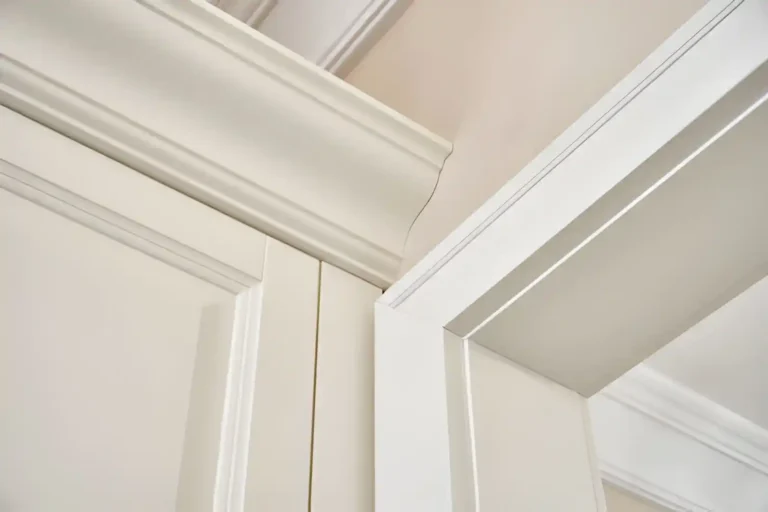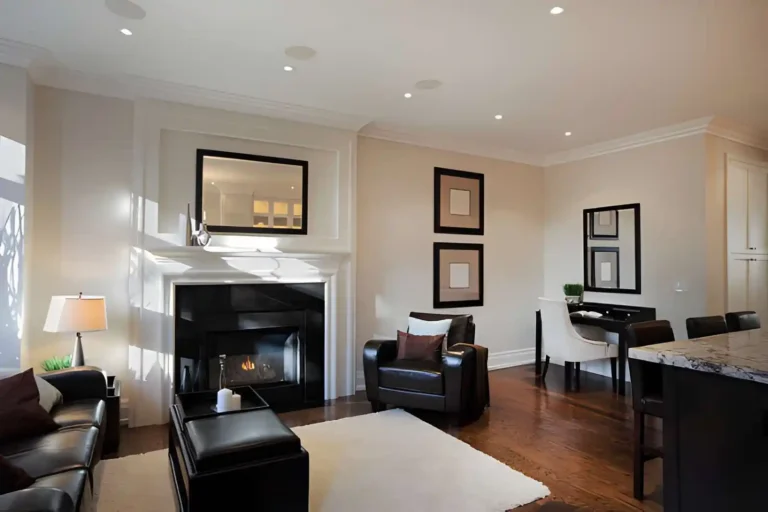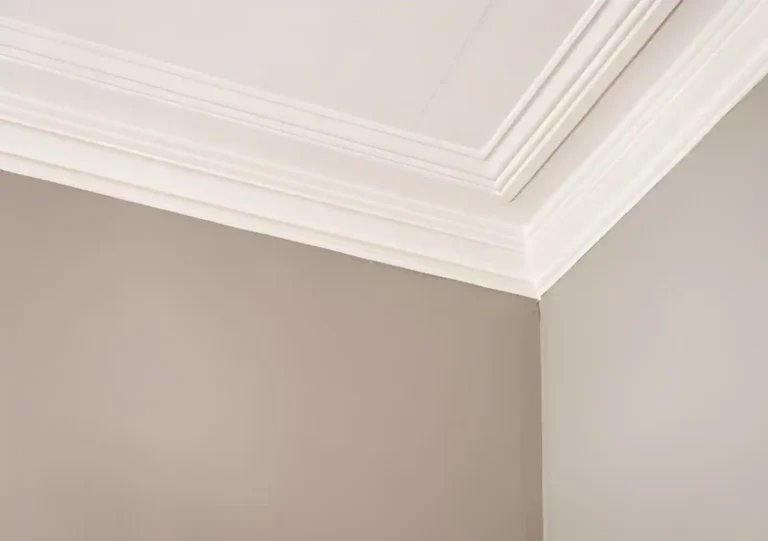

If you live in a period home and your cornice is cracked, chipped, or failing, the first and most important question is what is it actually made from? Identifying old plaster cornice correctly determines whether repair is realistic, whether replacement is wiser, and how your renovation should be planned.
This guide explains how to recognise traditional plaster cornice, what makes it behave differently from modern alternatives, and what that means for repair or replacement decisions in Irish homes.
If removal is unavoidable, follow our guide to removing old coving without damaging walls. After repair or restoration, use our advice on whether cornice and ceiling should be the same colour.
Why Identifying Old Plaster Cornice Matters
Repair and replacement decisions depend heavily on material. Old plaster cornice behaves very differently from modern lightweight mouldings, and treating it the same way often leads to problems.
Misidentification commonly results in:
- Failed repairs that crack again
- Damage after renovation work, especially replastering
- Poor replacement choices that clash visually or structurally
Accurate identification saves time, money, and frustration by setting realistic expectations from the outset.
👉 For the full decision framework, see: Cornice Repair & Restoration: What You Need to Know
What Is Traditional Plaster Cornice?
Traditional plaster cornice was typically made from:
- Lime plaster
- Gypsum plaster
- Fibrous plaster (plaster reinforced with fibres)
It was often hand-cast in moulds or run in situ directly onto walls and ceilings. This makes it fundamentally different from factory-made modern profiles.
Key characteristics:
- Heavy and rigid
- Mechanically fixed or bedded into wet plaster
- Brittle once cured
- Sensitive to movement and vibration
Plaster cornice is common across Ireland’s older housing stock and remains a defining feature of many period interiors.
Common Periods Where Plaster Cornice Is Found
Understanding the age of a property gives strong clues about the cornice material.
Victorian & Edwardian Homes
- Often feature decorative or ornate profiles
- Deep projection with strong shadow lines
- Multiple steps, leaves, or classical motifs
- Plaster almost always used
Early 20th-Century Properties
- Simpler profiles, but still substantial
- Transitional styles between ornate and modern
- Plaster remains common, though less elaborate
Georgian & Pre-20th-Century Buildings
- Formal proportions and symmetry
- Classical detailing
- Often historically significant
- Original plaster cornice likely throughout
Visual Signs Your Cornice Is Old Plaster
These visual clues are the safest way to identify plaster without causing damage.
Sharp but Irregular Detail
- Crisp edges that aren’t perfectly uniform
- Subtle inconsistencies along the length
- Evidence of hand finishing rather than machine precision
Modern cornice is usually too perfect by comparison.
Hairline Cracking Patterns
- Fine surface cracking across paint layers
- Cracks following stress points or joints
- Cracking that reappears after repainting
These cracks are typical of rigid plaster responding to movement.
Paint Build-Up Over Time
- Rounded detail caused by decades of repainting
- Softened edges rather than crisp lines
- Uneven surfaces beneath paint layers
Heavy paint build-up is far more common on older plaster than modern materials.
Physical Clues That Confirm Plaster Cornice
If visual signs aren’t conclusive, careful physical checks can help.
- Weight and solidity: plaster feels dense and solid
- Sound: a dull, solid thud when gently tapped
- Fragility: chipped edges crumble rather than flex
- Material beneath paint: chalky, dusty residue
⚠️ Avoid aggressive testing. Old plaster damages easily and repairs are rarely invisible.
Plaster vs Modern Cornice: Key Differences
Traditional Plaster Cornice
- Heavy and brittle
- Mechanically fixed or bedded into plaster
- Difficult to repair invisibly
- High risk during renovation works
Plaster performs well when left undisturbed—but poorly when buildings move or are upgraded.
Modern Lightweight Cornice
- Lightweight and slightly flexible
- Adhesive-fixed rather than mechanically fixed
- Consistent profiles across lengths
- Paint-ready and moisture-resistant
These characteristics are why many renovation projects now opt for sympathetic replacement using modern mouldings from Gaudi Coving, which respect proportion without inheriting plaster’s long-term weaknesses.
How Old Plaster Cornice Behaves During Renovation
Plaster cornice often fails after renovation, not before.
Common triggers include:
- Vibration from rewiring or drilling
- Ceiling replastering that breaks original bonds
- Lighting upgrades introducing movement and heat
- Removal of adjacent materials that once supported it
It’s common for plaster cornice to appear “fine” until work begins—then crack or loosen rapidly.
Can Old Plaster Cornice Be Repaired?
Repair Is Sometimes Viable When:
- Damage is limited to minor cracks
- Chips are small and localised
- Cornice remains firmly fixed
Repair Becomes Unreliable When:
- Cracks repeatedly reappear
- Sections are loose or sagging
- Parts are missing or shattered
👉 For practical repair guidance, see: How to Repair Cracked or Damaged Cornice
Can Old Plaster Cornice Be Matched?
Exact matching is rare.
Reasons include:
- Original moulds no longer exist
- Profiles were often handmade
- Paint build-up alters original shape
Partial matching often draws attention rather than blending in. In many cases, full-room replacement produces a more convincing result than patched repairs.
Repair vs Replace: What Identification Tells You
Identifying plaster cornice doesn’t automatically mean it must be preserved.
Key principles:
- Structural condition matters more than age
- Original character can be respected with modern profiles
- Replacement is sometimes the most honest solution
Preservation is worthwhile when cornice is stable and largely intact—not simply because it’s old.
DIY vs Professional Assessment
What Homeowners Can Safely Identify
- Visual irregularities
- Cracking patterns
- Paint build-up
- Obvious movement or sagging
These clues are usually enough to confirm plaster.
When Specialist Advice Is Needed
- Listed or protected buildings
- Highly ornate plasterwork
- Structural movement or major cracking
In these cases, incorrect intervention can permanently damage original features.
Frequently Asked Questions About Old Plaster Cornice
Final Tips for Assessing Old Cornice
- Identify material before repairing
- Don’t assume age equals quality
- Be realistic about repair outcomes
- Consider long-term stability, not just originality
Final Thoughts: Identification Comes Before Decision
Old plaster cornice has undeniable character—but it also has limitations. Correct identification leads to better decisions, whether that means careful repair or thoughtful replacement.
Modern materials can respect scale, proportion, and architectural intent without recurring cracks or failures. Informed decisions protect both the home and the final finish—ensuring your renovation improves the space rather than inheriting old problems.