
Painting coving is the final step that brings an installation together. Done well, it creates crisp lines, improves proportion, and gives a room a truly finished look. Done poorly, it can undo all the hard work that went into measuring, cutting, and fixing.
In this guide, we’ll answer the most common questions homeowners ask—do you paint coving, what do you paint coving with, how to paint coving properly, and should coving be the same colour as the ceiling—with practical, confidence-boosting advice for modern interiors.
Should You Paint Coving?
The Short Answer: Yes
Coving is designed to be painted. While many modern mouldings come with a clean, ultra-white finish, painting:
- Blends the coving seamlessly with the ceiling and walls
- Improves durability and cleanability
- Gives a more intentional, professional appearance
Unpainted coving can look unfinished, especially once walls and ceilings are painted around it.
What Do You Paint Coving With?
Choosing the right paint is essential for a smooth, even finish.
Best Paint Types for Coving
For most interiors, the best options are:
- Water-based emulsion – the most common and DIY-friendly choice
- Acrylic paint – durable, flexible, and easy to apply
These paints:
- Dry quickly
- Don’t yellow over time
- Are easy to clean up
Oil-based paints are rarely necessary and can create overly heavy finishes.
Why Paint-Ready Coving Makes a Difference
Modern coving—such as that supplied by Gaudi Coving—is designed to be paint-ready. This means:
- Excellent paint adhesion
- Even coverage with fewer coats
- Minimal preparation compared to raw plaster
This is a major advantage for both DIY users and professionals.
How to Paint Coving Properly
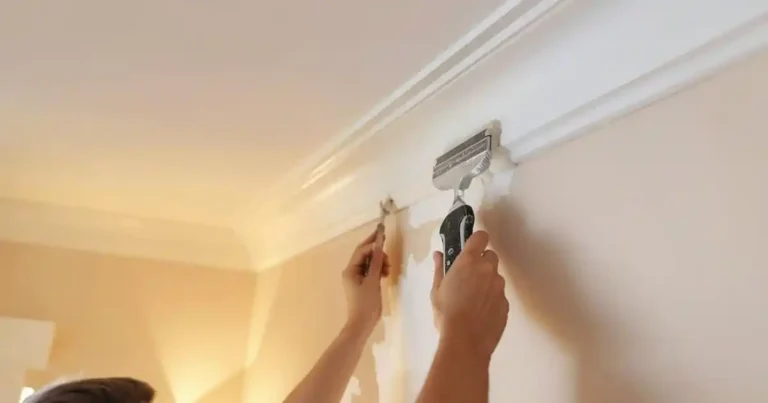
Preparation Before Painting
Good preparation is the difference between an average result and a great one.
Before painting:
- Fill all joints and small gaps with decorator’s filler
- Allow filler to dry fully
- Lightly sand to remove ridges or excess
- Wipe down to remove dust
Skipping this step is the most common cause of poor finishes.
Tools You’ll Need
- A good-quality cutting-in brush
- A small mini roller (optional but helpful)
- Clean paint tray
- Dust sheet
Spray painting is unnecessary for most residential projects.
Painting Technique for a Clean Finish
For best results:
- Paint the ceiling first
- Then paint the coving
- Finish with the walls
Apply paint in thin, even coats. Two coats are usually sufficient. Avoid overloading the brush, which can cause drips and loss of detail.
Do You Paint Coving the Same Colour as the Ceiling?
This is one of the most searched questions—and the answer depends on the look you want.
Painting Coving the Same Colour as the Ceiling
This is the most popular choice for modern homes.
Benefits:
- Creates a sense of height
- Keeps lines clean and minimal
- Works well in small or low-ceilinged rooms
- Ideal for contemporary and Scandinavian-style interiors
White-on-white schemes are especially effective at highlighting architectural detail without drawing attention to it.
Painting Coving a Different Colour
Painting coving a different colour can work when:
- The coving is a strong decorative feature
- Ceilings are high
- You want to emphasise classical detailing
However, strong contrast can visually lower ceilings and overpower smaller spaces.
Colour Choice Tips for Different Interior Styles
Modern & Contemporary Interiors
- Same colour as the ceiling
- Soft whites or light neutrals
- Minimal contrast
Classic & Transitional Spaces
- Slight tonal variation from the ceiling
- Warm whites or muted neutrals
- Subtle contrast rather than bold colour blocks
Small vs Large Rooms
- Small rooms benefit from blended colours
- Larger rooms can handle more contrast without feeling cramped
Common Coving Painting Mistakes (And How to Avoid Them)
- Skipping joint filling and sanding
- Using the wrong paint type
- Painting walls before coving
- Applying paint too thickly
- Rushing drying times between coats
Taking your time at this stage pays off more than anywhere else in the process.
Is Painting Coving DIY-Friendly?
Yes. Painting coving is one of the most DIY-accessible stages of installation, particularly with modern lightweight mouldings. With basic tools and patience, most homeowners can achieve a clean, professional finish.
The key is preparation—not speed.
Frequently Asked Questions About Painting Coving
Final Thoughts: The Right Paint Makes All the Difference
Painting coving isn’t just a finishing touch—it’s what turns installed moulding into a cohesive design feature. With the right paint, careful preparation, and thoughtful colour choice, coving blends seamlessly into your interior and elevates the entire space.
Modern coving is designed to paint beautifully. Take your time, keep it simple, and the results will speak for themselves.
A smooth, paint-ready profile like the GAUDI 1.50.175 cornice takes primer and topcoat evenly, which is exactly what you want when following the tips above.