
Can coving adhesive be used as a filler? Coving adhesive is designed primarily to fix decorative mouldings where walls meet ceilings, but many homeowners and trade professionals in Ireland are increasingly asking a practical question: can it do more than that? With renovation activity booming across Dublin, Cork, Galway, and beyond, efficiency and versatility are top priorities.
Whether you’re a homeowner aiming for a polished, designer finish or a contractor managing multiple projects, understanding how far you can push one product matters. Coving adhesive is known for its strong bond, workable consistency, and ease of use—but it also has clear limitations.
Brands like Gaudi Coving have made installation easier with high-quality systems, but knowing when to use adhesive as a filler—or even for skirting boards—can save time, reduce costs, and prevent costly mistakes.
In this guide, we’ll break down exactly where coving adhesive works, where it doesn’t, and how to get the best results without compromising on durability or finish.
What Is Coving Adhesive Designed For?
Core Purpose of Coving Adhesive
Coving adhesive is specifically formulated to bond lightweight decorative mouldings—such as polystyrene or polyurethane coving—to walls and ceilings. It offers:
- Strong initial grab
- Enough working time for adjustments
- Gap-filling capability for uneven surfaces
Unlike general adhesives, it’s engineered to create a seamless transition between ceiling and wall, ensuring a smooth, paint-ready finish.
Types of Coving Adhesives
There are several types available, including:
- Powder-based adhesives – mixed on-site, often used by professionals
- Ready-mixed adhesives – convenient for DIY use
- Polymer-based adhesives – modern, flexible, and moisture-resistant
For a deeper breakdown of adhesive types and performance, see the pillar guide: Best coving adhesive: types, how to use & drying times.
Can You Use Coving Adhesive as a Filler?
When It Works Well
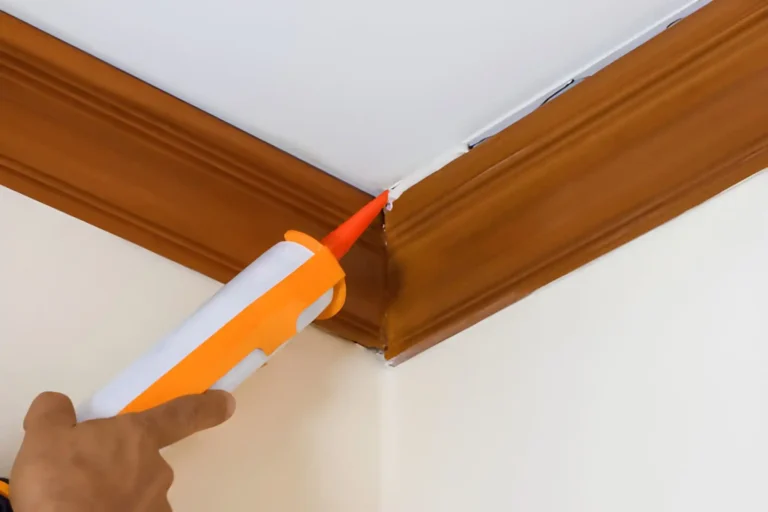
Yes—coving adhesive can absolutely function as a filler in certain situations. It performs particularly well for:
- Filling small gaps between coving and walls
- Smoothing joints and seams
- Correcting minor surface imperfections
Because it’s designed to bridge uneven surfaces, it naturally doubles as a finishing material during installation.
When It’s Not Ideal
However, it’s not a universal replacement for filler. Avoid using it for:
- Deep holes or cracks
- Structural repairs
- Areas with frequent movement
In these cases, a dedicated filler will offer better durability and flexibility.
Comparison with Standard Fillers
Compared to traditional fillers:
- Adhesion: Stronger initial bond
- Flexibility: Slightly more forgiving than brittle fillers
- Sanding: Can be sanded, but not always as smoothly
If you’re unsure about surface compatibility, it’s worth reading: Will coving adhesive stick to tiles or wallpaper?
Can Coving Adhesive Be Sanded?
Sanding Capabilities Explained
Most coving adhesives can be sanded once fully cured, making them suitable for finishing work. However, results depend on the formulation:
- Gypsum-based adhesives: Easier to sand
- Polymer-based adhesives: Slightly more flexible, harder to sand perfectly
Best Practices for Sanding
To achieve a professional finish:
- Allow full curing (typically 24 hours)
- Use fine-grit sandpaper (180–240 grit)
- Sand lightly to avoid damaging the surface
Common Mistakes
- Sanding too early (causes tearing)
- Using coarse sandpaper
- Applying excessive adhesive that requires heavy sanding
Can You Use Coving Adhesive for Skirting Boards?
When It Might Work
In some cases, coving adhesive can be used for skirting boards—particularly when:
- The skirting is lightweight
- The surface is smooth and well-prepared
- The application is decorative rather than structural
This can be useful for quick installations or minor refurbishments.
When You Should Avoid It
For most skirting applications, it’s not the best choice. Avoid using it when:
- Installing heavy MDF or timber skirting
- Walls are uneven
- The area experiences high traffic or impact
Better Alternatives for Skirting
Instead, consider:
- Grab adhesives for strong initial hold
- Hybrid polymer adhesives for flexibility and strength
- Mechanical fixings (nails or screws) for maximum durability
For more on adhesive selection, see: What adhesive do you use for polystyrene coving?
Pros and Cons of Using Coving Adhesive Beyond Coving
Advantages
- Easy to apply
- Good gap-filling properties
- Paint-ready finish
- Cost-effective for small jobs
Disadvantages
- Not suitable for structural bonding
- Less strength than dedicated adhesives
- Longer drying times in thick layers
Drying and Curing Considerations
Typical Drying Times
- Initial grab: 10–30 minutes
- Full cure: 12–48 hours
Factors Affecting Drying
- Humidity (especially in Irish homes)
- Surface porosity
- Thickness of application
Best Practices for Homeowners (Residential Renovators)
Achieving a Designer Finish
To get that “Pinterest-perfect” look:
- Use adhesive primarily for bonding and light filling
- Combine with proper fillers for larger gaps
- Focus on clean, crisp joints
Common DIY Mistakes to Avoid
- Using one product for everything
- Skipping surface preparation
- Over-applying adhesive
Style Considerations
Matching coving with skirting profiles can elevate a space from basic to high-end—especially in period homes or modern builds with architectural detailing.
Best Practices for Trade Professionals
Efficiency on Site
Coving adhesive can speed up installations when used correctly—but misuse can lead to rework.
Professional Finish Standards
- Seamless joints
- Smooth, paint-ready surfaces
- Minimal callbacks
Product Selection Tips
Using reliable suppliers like Gaudi Coving ensures:
- Consistent quality
- Reliable delivery
- Compatibility across systems
When to Use Specialist Products Instead
Dedicated Fillers
Best for deep gaps, cracks, and repairs.
High-Strength Adhesives
Essential for skirting boards and heavy mouldings.
Hybrid Solutions
Combining adhesive and filler often delivers the best results—especially in renovation work.
Cost vs Performance Considerations
Is It Cost-Effective?
Using coving adhesive as a filler can save money on small jobs—but overusing it may lead to poor results and rework.
Long-Term Durability
Potential issues include:
- Cracking in large gaps
- Shrinkage over time
- Reduced performance in high-moisture areas
FAQs – Can Coving Adhesive Be Used as a Filler?
Conclusion
Coving adhesive is a versatile product—but it’s not a one-size-fits-all solution. While it works well as a light filler and can even handle certain skirting applications, it’s important to understand its limits.
For homeowners, using it correctly can help achieve a polished, high-end finish without unnecessary complexity. For trade professionals, it can improve efficiency—but only when paired with the right materials for the job.
The key is balance: use coving adhesive where it excels, and don’t hesitate to switch to specialist products when required.
For a complete understanding of adhesives, application techniques, and quantities, explore the rest of this cluster—including related articles like How much coving adhesive do I need?.
By choosing quality systems from trusted suppliers like Gaudi Coving, you ensure results that are not only visually impressive but built to last.