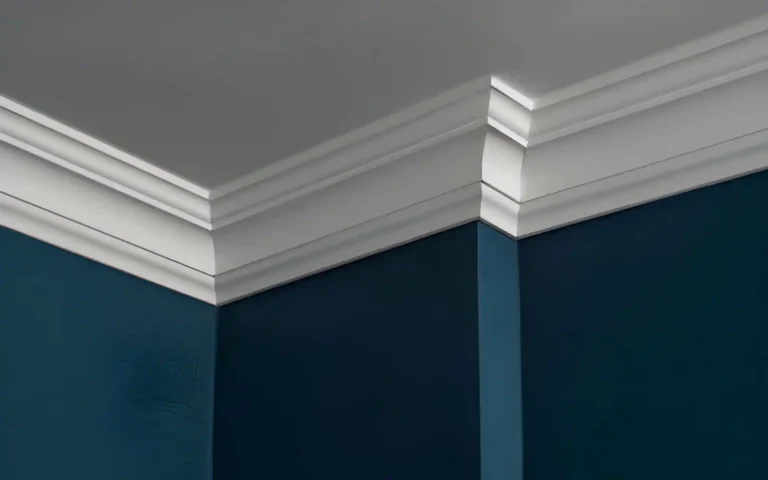

MDF vs Polyurethane Skirting Boards – when renovating or finishing a home, skirting boards are one of those details that quietly define the entire space. For the design-conscious Irish homeowner, they’re not just functional — they frame the room, enhance ceiling height, and complete the architectural story.
But one question keeps coming up during second fix:
Should you choose MDF or Polyurethane skirting boards?
Builders often default to MDF. Designers increasingly specify high-density polyurethane. And homeowners are left wondering:
- Which lasts longer in the Irish climate?
- Which looks sharper?
- Which gives that “architectural finish” — not a developer-basic look?
This guide breaks it down clearly — so you can choose with confidence.
What Is MDF Skirting?
MDF (Medium-Density Fibreboard) Explained
MDF is an engineered wood product made from compressed wood fibres and resin. It’s widely used in Irish renovations and new builds for:
- Budget skirting boards
- Architraves
- Cabinet carcasses
- Door frames
It is typically supplied primed and paint-ready, making it convenient for painters and installers.
Because it’s smooth and uniform, MDF takes paint well and produces a clean finish — especially in modern interiors with simple square or chamfered profiles.
Why Builders Often Recommend MDF
MDF remains popular with trades for several reasons:
- Lower material cost
- Easy to cut and install
- Widely available across Ireland
- Familiar to carpenters
- Acceptable finish once painted
However, not all MDF is equal. Moisture-resistant (MR) MDF performs better in damp conditions — but it still has structural limitations because it’s wood fibre at its core.
What Is Polyurethane Skirting?
High-Density Polyurethane Explained
Architectural polyurethane skirting is a high-density polymer material engineered specifically for decorative mouldings.
It is:
- Lightweight
- Fully moisture-resistant
- Pre-primed and paint-ready
- Extremely crisp in detail
This is not soft, low-grade polystyrene. High-density polyurethane is used widely across European interiors where architectural detailing and long-term durability matter.
It’s increasingly specified in Irish renovations where homeowners want a refined, period-inspired or “modern classic” finish — without the cracking issues associated with plaster.
MDF vs Polyurethane Skirting: Head-to-Head Comparison
1. Moisture Resistance (Critical in Irish Homes)
Ireland’s climate plays a bigger role than many realise.
MDF:
- Can swell if exposed to moisture
- Vulnerable in kitchens, bathrooms, and hallways
- Sensitive to damp subfloors and high humidity
- MR MDF improves performance — but doesn’t eliminate risk
Polyurethane:
- Fully moisture resistant
- Will not swell, warp, or rot
- Stable in humid or coastal environments
- Suitable for underfloor heating areas
Winner: Polyurethane
For Irish homes, moisture resistance is not a minor detail — it’s a long-term performance factor.
2. Durability & Impact Resistance
Skirting boards take daily wear: hoovers, shoes, toys, furniture.
MDF:
- Can dent or chip on impact
- Corners vulnerable during installation
- May require filling and repainting over time
Polyurethane:
- Dense outer shell
- More resistant to knocks
- Maintains sharp edges
- Less prone to transport damage
For trade professionals who want fewer call-backs, durability matters.
Winner: Polyurethane
3. Detail & Finish Quality
For homeowners who believe “details make the house feel complete”, this is the most important category.
MDF:
- Excellent for simple, contemporary square profiles
- Less sharp definition on intricate mouldings
- Limited refinement in classical detailing
Polyurethane:
- Superior profile clarity
- Crisp shadow lines
- Cleaner transitions and curves
- Stronger visual impact in period or high-end interiors
If you’re aiming for:
- Modern classic interiors
- Victorian or Georgian-inspired detail
- Taller skirting (150mm+)
- Architectural wall panelling
Polyurethane delivers a noticeably sharper finish.
Winner: Polyurethane
4. Installation & Trade Experience
For builders, carpenters, and fit-out teams:
MDF:
- Familiar and predictable
- Heavier to transport
- Generates dust when cut
- More prone to edge damage
Polyurethane:
- Lightweight and easy to handle
- Faster overhead positioning
- Cleaner cuts
- Less breakage during delivery
- Easier installation on uneven walls
For trade professionals focused on efficiency and consistency, polyurethane often reduces friction on site.
5. Cost Comparison
| Feature | MDF | Polyurethane |
|---|---|---|
| Material Cost | Lower | Higher |
| Long-Term Durability | Medium | High |
| Moisture Resistance | Moderate (MR grade improves it) | Excellent |
| Profile Detail | Basic–Good | Excellent |
| Lifespan | Moderate | Long |
MDF is cheaper upfront.
Polyurethane typically offers better long-term value.
For homeowners planning to stay long-term — or investing in a high-spec renovation — the lifecycle cost becomes more important than initial spend.
When MDF Might Be the Right Choice
MDF still has its place.
It can be suitable when:
- Budget is tight
- The design is minimal and square-edged
- Rooms are dry and well-ventilated
- The property is short-term (e.g. resale-focused renovation)
For straightforward modern interiors, MDF performs adequately — especially when properly sealed and painted.
When Polyurethane Is the Better Investment
Polyurethane becomes the stronger choice when:
- Completing a high-end renovation
- Extending or upgrading a period property
- Installing tall skirting boards (150–200mm+)
- Adding decorative wall mouldings
- Working in kitchens or humid areas
- Seeking long-term durability
- Collaborating with interior designers
For homeowners who don’t want swelling, chipping, or repainting in 5 years — polyurethane provides peace of mind.
Irish Climate Consideration (Often Overlooked)
Ireland’s humidity levels, damp subfloors, and extended wet seasons create conditions that test wood-based materials.
Moisture-resistant MDF helps — but it remains compressed wood fibre.
Polyurethane, by contrast, is inert. It does not absorb moisture and does not expand.
This makes it particularly suitable for:
- Coastal homes
- New builds still drying out
- Renovations with underfloor heating
- Homes with limited ventilation
If durability in Irish conditions matters, material choice becomes critical.
FAQ: MDF vs Polyurethane Skirting Boards
Final Verdict
If you want:
- A safe, budget-friendly option → MDF works
- A premium, architectural, moisture-resistant finish → Polyurethane is superior
For design-conscious Irish homeowners, detail-driven renovators, and trade professionals who value long-term performance, polyurethane increasingly makes sense.
Skirting boards are not just trim.
They frame your walls.
They define your proportions.
They complete the architectural finish.
Choose accordingly.